
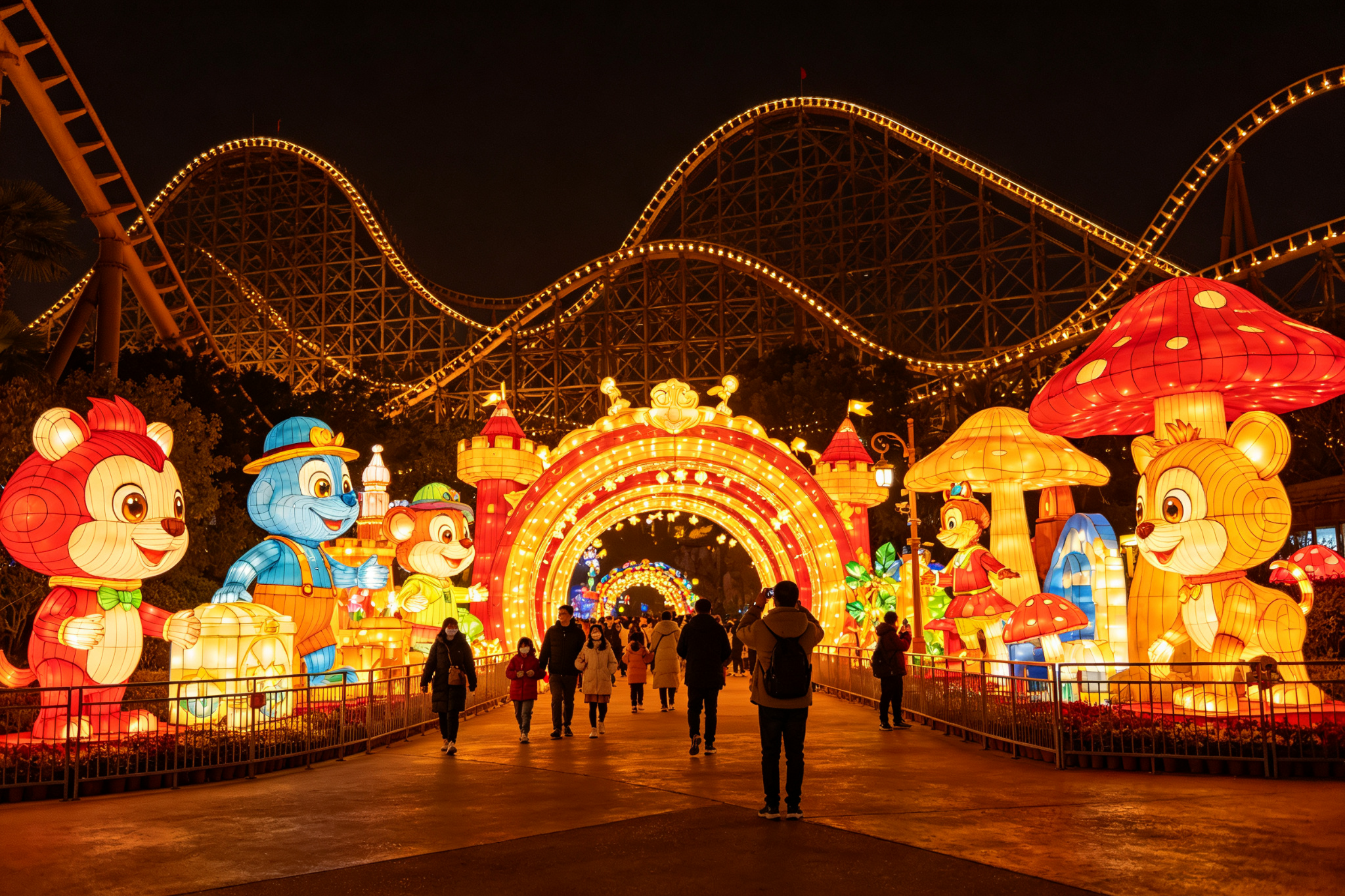
Why Theme Parks Are Adding Lantern Zones
Theme parks operate on thin margins during shoulder seasons, and evening hours are often underused once the main rides close. Lantern festivals address both problems by creating a distinct after-dark experience that can be ticketed separately or bundled with daytime admission. Rather than competing with the park's existing rides, the lantern zones complement them: visitors spend the afternoon on attractions and the evening walking through illuminated themed areas, which extends the visit, increases on-site spending, and gives the park a reason to remain open later.
The financial logic is compelling. A lantern festival can lift evening attendance substantially during its run, and because the displays are temporary and modular, the park does not commit to permanent construction. The same displays can be reconfigured across seasons, and themes can be refreshed to encourage repeat visits. For parks in competitive markets, the festival also provides a strong marketing story — a visually distinctive event that photographs well, travels across social media, and can be timed to capture holiday demand. The format is flexible enough to work at large destination parks, regional amusement parks, and smaller family entertainment centers.
Popular Park Themes
The most effective lantern festivals align with a park's existing identity and zones, so the event feels like an extension of the park rather than a separate overlay. The four themes below are the most common and map directly to established product categories.
| Theme Zone | Typical Displays | Best Park Fit |
|---|---|---|
| Fairy Tale Kingdom | Castles, carriages, storybook scenes, magical characters, wishing areas | Family parks, fantasy zones, children's areas |
| Animal Kingdom | Large animals, birds, insects, marine creatures, dinosaurs, natural habitats | Parks with wildlife or adventure zones |
| Sci-Fi & Space | Astronauts, planets, futuristic structures, robots, light tunnels, geometric displays | Thrill parks, technology-themed zones |
| Festival & Holiday | Seasonal scenes, holiday symbols, themed entrances, cultural displays | Winter and holiday programming across all park types |
Many parks combine two or three zones along a single route, which broadens appeal and creates a sense of progression. A typical layout opens with a high-impact entrance arch, moves through a signature zone that anchors the marketing, and finishes with an immersive tunnel or plaza that serves as the final photo location. The design should be developed jointly with the manufacturer so the route matches the park's existing paths, sightlines, and operational constraints.
Designing Zones That Fit Your Park
Site planning begins with the visitor flow rather than the displays themselves. The route should move guests from the entrance through a sequence of visual peaks, with larger displays placed at intervals to maintain interest and smaller pieces filling the transitions. It is important to avoid placing the tallest structures where they block sightlines to operational areas or create confusion with permanent landmarks. The design should also account for the park's daytime operation: displays that remain visible during the day need to look finished in daylight, and cabling and anchors should be routed to avoid disrupting normal operations.
Zoning is also an operational tool. Dividing the route into named zones makes it easier to manage staff, signage, and sponsorship, and it gives visitors a mental map of the experience. Each zone should have a clear visual identity, a seating or photo point, and a staff position at peak times. The transition between zones is an opportunity to create anticipation — for example, a light tunnel connecting two themed areas. The manufacturer's design team should produce a site plan showing display positions, dimensions, cable routes, and guest flow, which the park then reviews against its own safety and operations requirements.
Capacity and Power Planning
Capacity planning ensures that the festival remains comfortable and safe at peak times. The park should calculate the route's holding capacity, including walkways, photo points, and any queue areas, and set a maximum simultaneous occupancy below that figure. Pinch points such as tunnels, bridges, and entrance arches require particular attention because they slow movement and create temporary crowding. The event management plan identifies staff positions at these points, one-way routing where needed, and a procedure for pausing entry if a zone reaches capacity.
Power planning is developed alongside the site design. The manufacturer provides the power consumption of each display, and the park's electrical team maps these to available distribution points, ensuring that no circuit is overloaded and that cable routes are protected from guests and weather. Temporary distribution should be placed out of walkways, with weatherproof enclosures and clear labeling. The installation is tested before opening, and the park should keep a simple power plan on site for reference during the event. This planning is usually straightforward when the manufacturer supplies complete electrical documentation, but it becomes a bottleneck if specifications are missing.
Seasonal Scheduling Strategies
The calendar strategy can be as important as the event itself. A well-scheduled lantern festival can connect several seasonal moments rather than serving a single holiday. The most common approach is to open around Halloween with fall-themed displays, transition into a holiday theme through November and December, and then extend into the Lunar New Year window with cultural displays. This allows the park to market the same physical event with refreshed themes across three demand periods.
Parks that operate year-round can also use lantern zones to fill weekday evenings and shoulder months when ride attendance is lower. The festival can be offered as a separate evening ticket, which protects daytime revenue while creating a new product, or bundled into admission to increase perceived value. The most successful schedules align the festival with local school calendars, paydays, and community events, and avoid competing with major local events that would draw the same audience. Planning the schedule 6 to 9 months ahead allows the park to lock in manufacturing capacity and market the event through season passes and early-bird offers.
ROI Case: How One Park Lifted Night Attendance
A regional amusement park introduced a six-week lantern festival in its fall shoulder season, using a combination of fairy tale and animal zones along a reconfigured evening route. The park sold the festival as a separate evening ticket while offering bundles to daytime guests, and it added themed food and beverage points along the route. Evening attendance during the festival period rose significantly compared with the same weeks in the prior year, and the park reported strong secondary spending on food, drinks, and merchandise. The displays were purchased rather than rented, allowing the park to reuse the core collection in the following season with refreshed theming.
The park's own analysis identified three factors behind the result: the event was visually distinct from the competition, the route was designed to keep guests moving through spending zones, and the schedule connected Halloween and holiday demand rather than sitting in a single week. The park also benefited from organic social media, because visitors shared photos of the signature displays. The broader lesson is that lantern festivals reward parks that treat them as a designed experience rather than a collection of props, and that early planning with the manufacturer directly affects both cost and quality. For custom design support, see our custom lantern festival page, and for large multi-zone projects, our large-scale display page.
Integrating With Existing Rides
The lantern festival should be designed around the park's existing operations, not in isolation. The route can use paths and plazas that are already part of the park, and the zones can be positioned to draw guests toward underused areas, food courts, and retail points. Large displays placed near the ends of ride queues create a natural transition from daytime attractions to the evening experience, while the signature zone can be located in a space that becomes a destination after the rides close. This integration increases the value of the festival without disrupting the familiar park layout.
It is also important to consider how the displays look and function during the day. In parks where the lantern route remains visible during daytime hours, the structures should look finished and attractive in daylight, and any operational cabling should be routed discreetly. The festival can be marketed as a transformation that begins at dusk, which gives visitors a reason to stay from afternoon into evening. The design process should therefore include both a daytime and an evening site review, with the manufacturer adjusting finishes and positions where the park's existing environment creates conflicts.
Staffing Models for the Festival
Staffing a lantern festival is simpler than staffing a full ride operation, but it requires specific roles. Zone attendants monitor guest flow and answer questions at the busiest points, particularly at tunnels, photo installations, and interactive zones. A technical contact, often supported by the manufacturer's documentation, handles any equipment issues during the run. Food and retail staff operate the secondary revenue points, and a small roaming team manages cleaning and minor maintenance. At the entrance, staff manage timed entry and guide guests onto the route.
The number of staff scales with attendance and route length, and the park can often extend existing shifts rather than hiring entirely separate teams, because the festival uses the same facilities and entry points. The installation period is staffed differently, combining the factory supervisor with local labor and the park's electrical team. A simple staffing plan mapped to the operating schedule, with additional positions on weekend and holiday nights, prevents both overstaffing on quiet weekdays and crowding at peak sessions.
Marketing the Festival
A lantern festival gives a park visually distinctive marketing material, and the campaign should begin before the event opens. Early-bird tickets and season-pass bundles build committed attendance, while preview images of the signature displays create anticipation. The most effective campaigns show the scale and immersion of the event rather than describing it in abstract terms, and they emphasize the experience — walking through illuminated zones after dark — rather than listing individual displays. Video content of comparable events, or renderings of the planned route, is particularly effective for visitors who have not attended a lantern festival.
Organic social media is a major asset because visitors photograph the displays voluntarily, and the park can encourage this with clearly designed photo points and a simple event hashtag. Local partnerships, tourism listings, and group sales extend the campaign beyond the park's own audience, and targeted marketing in the weeks before opening captures visitors planning seasonal activities. Because the festival is a temporary event, the marketing should create a sense of limited availability, which supports early bookings and timed entry. The manufacturer can supply high-quality images and descriptions of the displays early enough to support the full campaign window.
Frequently Asked Questions
How much does a theme park lantern festival cost?
Cost depends on the number and size of displays, the route length, and whether the park purchases or rents. A small single-zone event can be produced at a modest budget, while a multi-zone festival with large signature pieces is a larger investment. Direct factory pricing is typically 20-40 percent below intermediary pricing, and a detailed quote based on the site plan is the most reliable figure.
How long does installation take?
A typical theme park lantern festival is installed in 7-14 days, with a small team working under the manufacturer's supervisor. Larger multi-zone events may require up to three weeks, and the schedule includes electrical testing and a safety walk-through. Modular displays are designed for efficient assembly, and local labor is used alongside the manufacturer's team.
Can lantern zones be reused across seasons?
Yes, purchased displays are designed for reuse across multiple seasons with proper storage and maintenance, and themes can be refreshed by repositioning pieces or adding new displays. Many parks reuse the core collection for two or three seasons while changing the entrance and signature zones to keep the event fresh. Rental arrangements are better suited to parks that want a completely new theme each year.
What themes work best for amusement parks?
The strongest themes match the park's existing identity: fairy tale kingdoms for family parks, animal and dinosaur zones for adventure parks, and sci-fi or space themes for thrill and technology-oriented parks. Holiday and festival themes work across all park types during winter. Combining two or three zones along a single route broadens audience appeal.