
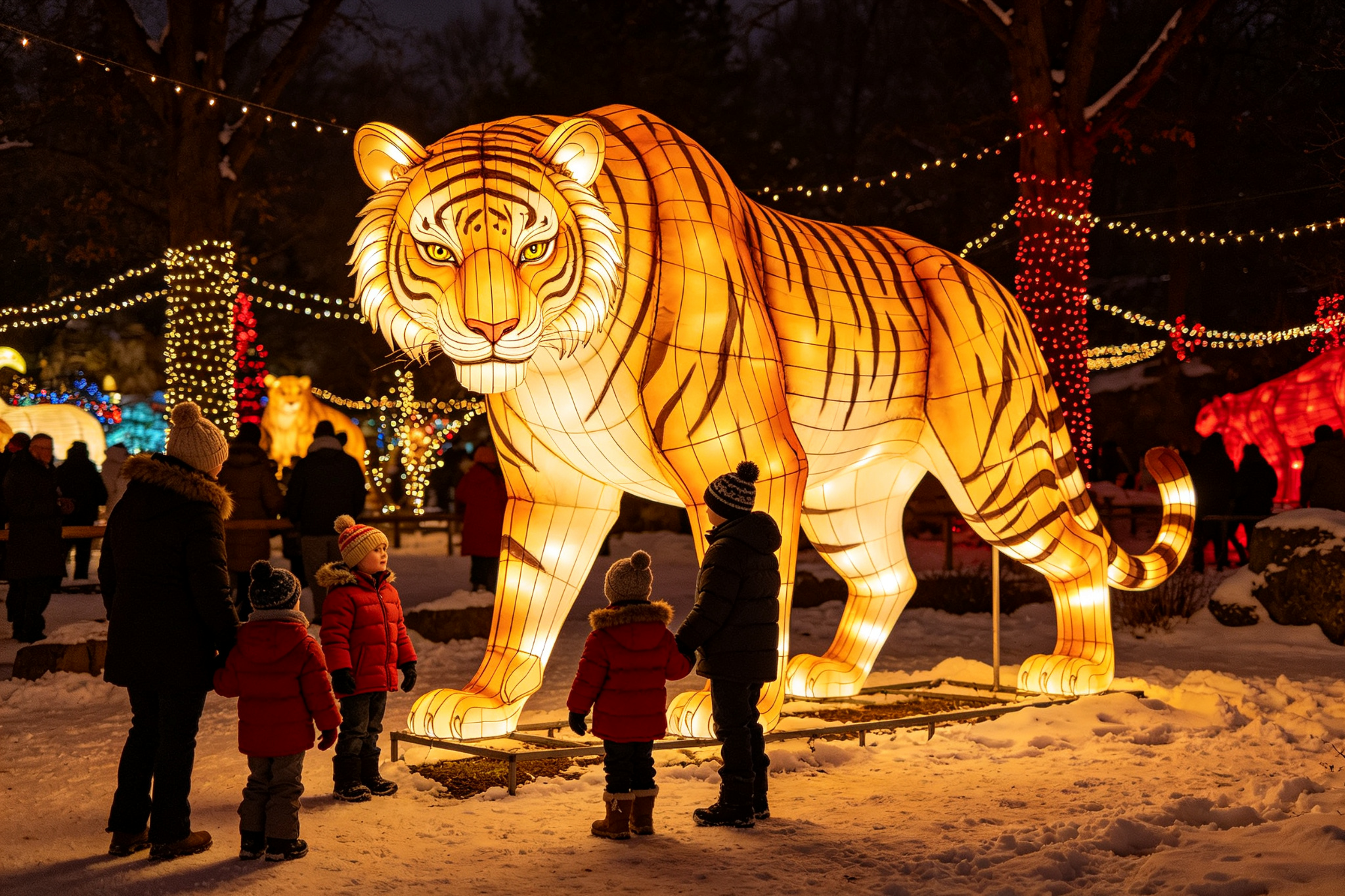
Why Lantern Festivals Are Booming in America
Over the past decade, lantern festivals have become one of the fastest-growing seasonal attractions in the United States, particularly at zoos, botanical gardens, and theme parks. Several factors drive the growth. Venues are looking for events that extend activity into the evening and fill the quieter winter months, and lantern festivals do both without requiring new permanent construction. At the same time, visitors have shown strong appetite for walkable, photo-rich experiences that appeal to multiple generations — a combination that traditional light displays and single-theme events often do not match.
The numbers support the trend. Successful zoo and garden lantern festivals regularly run for 4 to 8 weeks and draw tens to hundreds of thousands of visitors, with many venues reporting that the festival becomes one of their best-attended events of the year. The format also travels well: the same display language can be themed around local wildlife, cultural stories, or seasonal holidays, which allows each venue to differentiate its event. Most of the large-scale displays are sourced from manufacturing centers in China, particularly Zigong, where the majority of the world's festival lanterns are produced. This combination of proven visitor demand and a mature supply chain is why American venues continue to add festivals even in competitive entertainment markets.
Notable Lantern Festivals in the USA
Lantern festivals now operate across most regions of the country, with the strongest concentration in states where mild winters support outdoor evening events. The following regional overview illustrates the types of venues and themes visitors encounter; specific event names and dates change from year to year, so check current venue listings before planning travel.
| Region | Typical Venues | Common Themes |
|---|---|---|
| California & West Coast | Zoos, botanical gardens, county parks, theme parks | Ocean and wildlife, flowers, world landmarks, seasonal holiday displays |
| Texas & Southwest | Zoos, fairgrounds, city parks, ranches | Animals, cultural characters, holiday themes, large walk-through tunnels |
| Florida & Southeast | Theme parks, zoos, gardens, resort districts | Tropical animals, marine scenes, fairy tales, extended winter seasons |
| Northeast & Mid-Atlantic | Zoos, gardens, historic sites, waterfront parks | Seasonal and holiday themes, animals, cultural displays, illuminated architecture |
| Midwest & Mountain West | Zoos, parks, fairgrounds, casino resorts | Wildlife, dinosaurs, holiday themes, seasonal community events |
The strongest events are usually those that tie the display theme to the venue's identity — for example, a zoo emphasizing animal lanterns, a botanical garden focusing on flowers, or a historic site featuring illuminated architecture. This alignment makes the event feel integrated rather than imported and gives visitors a reason to choose it over a generic light show.
Best Season to Visit
Most American lantern festivals open between late October and early January, with the busiest period from Thanksgiving through the Lunar New Year window. The holiday season gives venues a natural marketing moment, while the cooler evening weather makes walking an outdoor event comfortable in southern and western states. Northern venues often schedule earlier in the season to avoid the coldest months, while Florida, Texas, and California can run comfortably through January and February.
A smaller number of venues run festivals in spring and summer, often tied to cultural celebrations or school vacation periods. Weekday evenings are less crowded and often discounted, while weekends and holiday weeks sell out in advance at the most popular events. When planning a visit, check the venue's closing time, because entry is often stopped 60 to 90 minutes before closing to allow visitors time to walk the full route.
What to Expect: Themes, Food, and Activities
A typical lantern festival is laid out as a one-way walking route through a series of themed zones, each containing several large illuminated displays. Visitors commonly encounter animal zones, flower and plant zones, illuminated world landmarks, cultural or mythological characters, and seasonal holiday displays. Larger events add interactive elements such as light tunnels, photo installations, and areas where children can engage with simple games or craft activities. The route is designed to be stroller- and wheelchair-accessible, with rest areas and food points spaced along the way.
Food and beverage offerings have expanded as venues recognize the revenue potential, and many events now include regional food trucks, warm drinks, dessert stalls, and seated dining areas. Entertainment can range from strolling performers and cultural demonstrations on selected nights to simple ambient music along the route. For visitors, the most important practical points are to arrive early in the evening, allow 60 to 120 minutes to walk the full route, and bring a phone or camera, because the displays are designed to be photographed.
How American Venues Source Lantern Festivals
The majority of large-scale American lantern festivals are sourced directly from manufacturers in Zigong, China, which produces the bulk of the world's festival displays. The sourcing process typically begins 4 to 6 months before opening, when the venue defines its theme, route, and budget. The manufacturer then develops a design package, including a site layout, themed display list, and renderings, before manufacturing begins. Displays are produced in modular sections, shipped by sea freight, and assembled on site by a team that combines the manufacturer's supervisors with local labor.
Venues can choose between purchasing displays outright, which allows reuse across multiple seasons, or rental-style arrangements where the manufacturer supplies and installs the displays for a single season. The choice depends on how the venue plans to use the event and whether it intends to refresh the theme each year. Direct factory sourcing is generally more cost-effective than working through intermediaries, and it gives the venue direct access to the design and engineering team. Our supplier page explains the direct-sourcing model, and our projects page shows the range of international event formats.
Planning Your Visit: Tickets, Parking, and Tips
Tickets for American lantern festivals are sold in timed entry slots at most venues, and buying in advance is recommended for weekends and holiday weeks. Prices vary by region and venue, with adult tickets commonly in the range of other seasonal attractions and discounts for children, seniors, and members. Many venues offer member previews, family packages, and group rates. Parking is typically handled through the venue's existing lots, and larger events add overflow parking or shuttle service on peak nights.
For the best experience, choose a weekday evening if possible, dress for outdoor weather, and check the weather forecast, because most events operate in light rain but may pause during severe storms. Visitors with young children should bring or rent a stroller, because the route is longer than a typical exhibit. Photographers often arrive near opening to capture the displays as the sky darkens, when the contrast between the lights and the evening sky is most striking. For the cultural background behind the displays, our Chinese Lantern Festival page is a useful starting point.
Cultural Adaptation for American Audiences
While lantern festivals originate in Chinese cultural tradition, American events succeed when they balance cultural authenticity with themes local visitors recognize. The most effective events retain the craftsmanship and visual language that make the format distinctive while organizing displays around universal subjects — wildlife, flowers, landmarks, stories, and seasonal scenes. This allows visitors to engage immediately without prior cultural knowledge, while those interested in the background can learn through interpretive signage and guided content. Presenting the event as a world-class illuminated experience rather than an imported cultural exhibit tends to broaden its commercial appeal.
Language and naming are part of this adaptation. Event names, zone titles, and display descriptions use straightforward English, and explanatory content is written for family audiences rather than specialists. Cultural elements are introduced as stories rather than instruction, which makes them enjoyable rather than academic. Venues that get this balance right attract both general visitors and audiences interested in cultural content, and they avoid the perception that the event is aimed only at a specific community. The manufacturer's design team can adapt themes to the local market while preserving the quality that defines the format.
Regional Audience Differences
Audience expectations vary across the country, and the event design should reflect the region. In California and the West, visitors respond strongly to nature, marine, and flower themes, and outdoor evening events are comfortable across a long season. In Texas and the Southwest, families attend in large groups, and bold, large-scale displays with strong photo appeal perform well. In Florida, visitors include both residents and tourists, which supports extended runs and tropical, marine, and fantasy themes. In the Northeast and Midwest, holiday and seasonal programming is strong, and events often emphasize warmth, light, and indoor-adjacent amenities during colder weeks.
Regional differences also affect scheduling. Northern events concentrate earlier in the season and market heavily around holiday weeks, while southern events can spread across a longer window and rely less on a single peak. Understanding the local competitive calendar is important too, because a festival performs best when it is not competing with an established regional event on the same weekends. The venue's local knowledge, combined with the manufacturer's design flexibility, allows the theme and schedule to be adapted to the specific market.
Budgeting for an American Event
American venues budget across four cost groups: the display package, logistics, installation, and local operations. The display package is quoted directly by the factory and forms the largest fixed component. Logistics includes sea freight, customs, and inland delivery, with a local broker handling clearance. Installation combines the factory supervisor with local labor and equipment. Local operations include marketing, staff, utilities, insurance, and any added entertainment or food infrastructure. Separating these groups makes the budget transparent and helps the venue distinguish one-time costs from recurring costs.
First-year events should also budget for a contingency, particularly for weather and installation, and they should clarify which costs the venue already covers through existing operations — parking, ticketing systems, and maintenance facilities often reduce the marginal cost. A direct factory quote avoids the markup added by intermediaries, and the manufacturer can indicate which display configurations deliver the strongest visual impact within a given budget. The most cost-effective events usually concentrate spending on a few signature pieces and a coherent route rather than spreading the budget thinly across many small displays.
Frequently Asked Questions
Where are the best lantern festivals in the USA?
Lantern festivals operate across most regions, with strong concentrations on the West Coast, in Texas and Florida, and across the Northeast and Midwest. The best events are usually hosted by zoos, botanical gardens, or theme parks that match the display theme to their venue. Current venue listings are the best way to find specific events and dates for a given season.
How much do lantern festival tickets cost in America?
Ticket prices vary by region and venue, typically in line with other seasonal attractions, with discounts for children, seniors, and venue members. Many events use timed entry and offer family packages, group rates, and member previews. Weekday evenings are often discounted and less crowded, while weekends and holiday weeks frequently sell out in advance.
When is lantern festival season in the US?
Most lantern festivals run from late October through early January, with the busiest period from Thanksgiving to the Lunar New Year. Southern and western states often run into January and February because of milder weather, while northern venues tend to open earlier. A smaller number of events take place in spring and summer around cultural or school vacation dates.
How do American zoos get Chinese lantern festivals?
Most American zoos and gardens source displays directly from manufacturers in Zigong, China, starting 4-6 months before opening. The process includes theme design, a site layout, manufacturing, sea freight, and on-site assembly. Venues can purchase displays for reuse or arrange single-season rental packages, and direct factory sourcing is usually more cost-effective than working through intermediaries.