
At-a-Glance Comparison
Venues choosing between a lantern festival and a Christmas light display are often comparing two different visitor experiences rather than two versions of the same product. A Christmas light display is typically built around strings, outlines, and themed scenes tied to a single holiday season, with strong visual familiarity but limited narrative scope. A lantern festival is built around large sculptural displays arranged in themed zones, each telling a story or representing a subject — animals, landmarks, cultural characters, or seasonal scenes. The difference matters because it affects attendance, dwell time, ticket pricing, and how often the event can be refreshed.
| Dimension | Lantern Festival | Christmas Light Display |
|---|---|---|
| Seasonality | Flexible; works across winter, cultural holidays, and shoulder seasons | Strongly tied to November-December |
| Visual structure | Large sculptural displays in themed zones | Strings, outlines, canopies, and holiday scenes |
| Narrative content | Multiple themes and stories along a route | Holiday theme with limited variation |
| Dwell time | Long; visitors walk and photograph each zone | Moderate; strong at signature pieces |
| Refresh potential | High; zones can be reconfigured and added | Limited by the holiday theme |
| Reuse across seasons | Designed for multi-season reuse | Reused annually for the same holiday |
| Broader audience | Families, cultural visitors, couples, groups | Holiday-focused families and visitors |
The choice is not simply which is better, but which matches the venue's goals. A venue seeking a single strong holiday event may be well served by Christmas lights, while a venue seeking a longer-running, repeatable attraction with broader themes often benefits from a lantern festival. Many venues ultimately combine elements of both, which is covered later in this article.
Attendance and Dwell Time
Attendance is driven by novelty and perceived value, and the two formats differ in how they sustain interest across a visit. A Christmas light display creates immediate seasonal atmosphere, but visitor engagement often concentrates at the largest signature pieces; once the route is familiar, repeat visits within the same season are less common. A lantern festival is structured as a sequence of distinct zones, each with new subjects, which keeps visitors engaged for longer and encourages them to complete the full route. The sculptural nature of the displays also makes each one a separate photo opportunity, which extends dwell time and increases social sharing.
For venues, the practical effect is that lantern festivals often report longer average visits and higher secondary spending, because guests are on site longer and pass through more food and beverage points. Christmas displays can generate very high peak attendance in the weeks before the holiday, but their season is shorter and they face direct competition from many other holiday events. A lantern festival can capture the same holiday demand while also extending into January and February, which spreads attendance across more operating days and reduces dependence on a narrow calendar.
Cost and Budget Comparison
Both formats require investment in equipment, installation, and operation, but the cost structures differ. A Christmas light display can be scaled from a modest installation to a very large canopy or drive-through event, and recurring costs center on replacement, storage, and labor. A lantern festival is built around a collection of sculptural displays, where the largest pieces represent the majority of the budget, but the collection is designed for multi-season reuse and can be expanded incrementally.
When comparing budgets, venues should look at cost per operating season rather than only the first-year price. A lantern festival with a higher initial cost may be reused across several seasons and themed to multiple occasions, lowering the per-season cost. A Christmas display is reused annually but is confined to one holiday window. Direct factory sourcing reduces the cost of both formats, and a transparent quote should separate equipment, shipping, installation, and ongoing maintenance. Our cost guide provides budget ranges for lantern festivals, and our rental article covers lower-upfront options for venues that want to test the format.
Seasonality Strategy
The calendar is where the two formats differ most sharply. Christmas lighting has a defined and highly valuable window from late November through December, supported by established spending traditions, but demand falls quickly after the holiday. A lantern festival can be scheduled across the same window and then extended into the Lunar New Year and winter cultural season, which gives a venue 8 to 12 weeks of potential operation rather than 4 to 6. In regions with mild winters, the festival can run even longer.
This extended season has operational value because it spreads fixed costs — marketing, installation, staffing — across more ticketed days. A venue can also refresh the theme within the season, for example by emphasizing holiday displays in December and cultural or animal zones in January, which encourages repeat visits. The key is to align the schedule with local demand patterns and avoid positioning the event as exclusively holiday content if the venue wants to extend beyond December. For venues that currently run Christmas displays, a lantern festival can be introduced as a parallel or follow-on event rather than a replacement.
Visitor Experience and Photo Opportunities
Social sharing has become a major driver of attendance for illuminated events, and the two formats produce different types of shareable content. Christmas displays generate strong seasonal imagery — familiar colors, trees, canopies, and holiday scenes — that performs well in the holiday window but is visually similar to many other events. Lantern festivals produce distinctive, subject-based imagery — large animals, illuminated landmarks, cultural characters, and immersive tunnels — that stands out in feeds and is less tied to a single moment in the calendar.
The immersive quality of a themed route also supports longer engagement: visitors move through a series of environments rather than past a continuous decorative surface, and each zone creates a new context for photos. Signature pieces such as large dragons, tunnels, or illuminated architecture become the images that define the event's marketing. For venues competing for attention in crowded social media environments, this distinctiveness has real value, because visitors share images that look different from the holiday content produced by every other attraction in the same weeks.
Can You Combine Both?
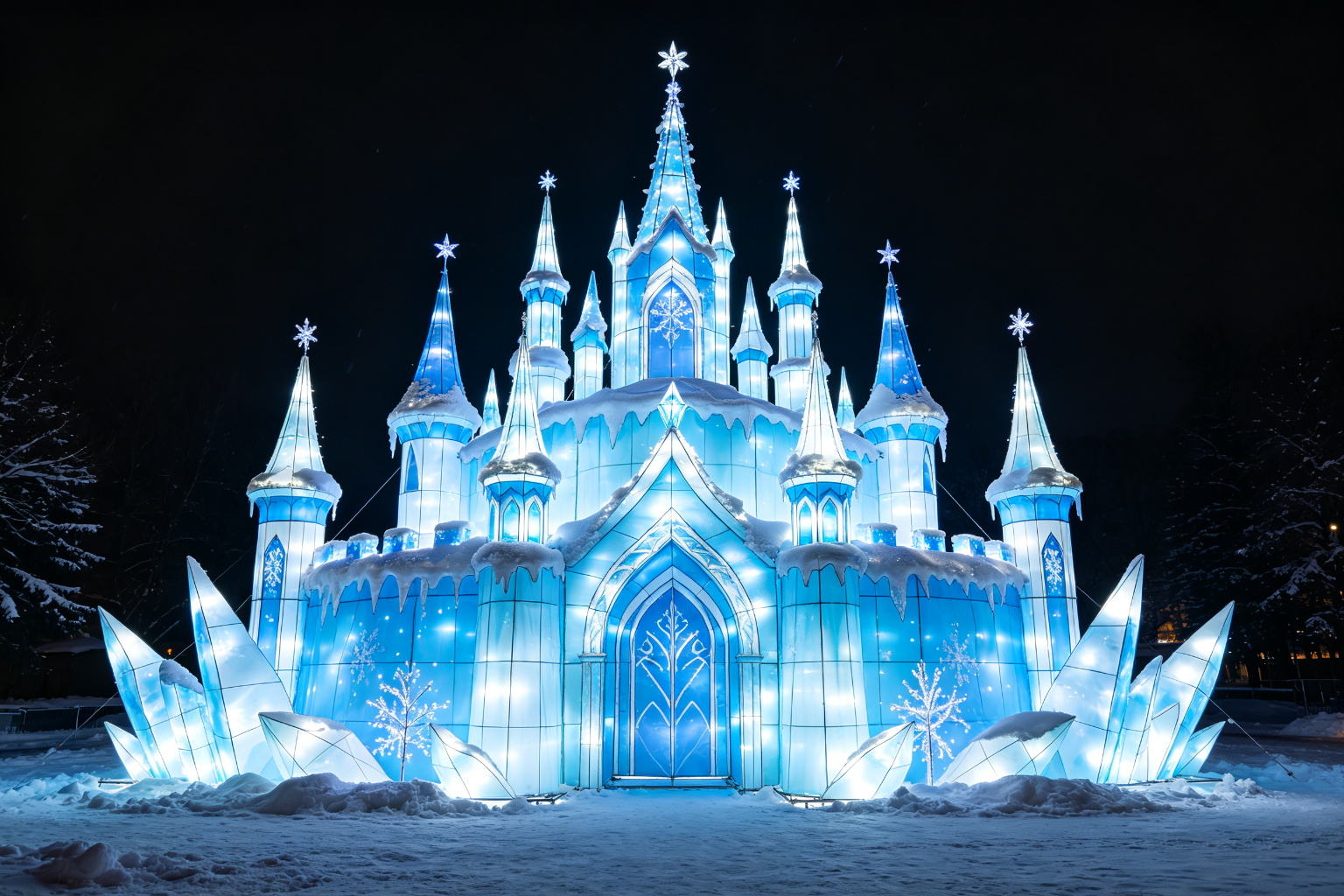
Combining the formats is often the most effective strategy, particularly for venues that already have a holiday lighting tradition. A holiday-themed lantern festival uses sculptural displays to tell a seasonal story — winter characters, gift and seasonal scenes, festive animals, and illuminated holiday architecture — while retaining the familiar colors and atmosphere of a Christmas event. The venue can market the event as a holiday attraction in December and then reposition it as a broader illuminated festival for the new year, extending the run without reinstalling equipment.
This approach protects the venue's existing holiday audience while adding the dwell time, narrative depth, and multi-season flexibility of a lantern festival. It also allows a gradual transition: a venue can add a small lantern zone to an established Christmas display, then expand in later seasons based on visitor response. The manufacturer can design displays that work in both contexts, avoiding the need to choose between two separate investments. For direct sourcing guidance, see our supplier page, and for the distinction between factories and intermediaries, our factory comparison article.
Maintenance Comparison
Maintenance requirements differ in character even where they are similar in frequency. Christmas light systems are built around many distributed elements, and maintenance tends to involve locating and replacing sections across strings, outlines, and canopies. The work is familiar to maintenance teams, but faults can be time-consuming to trace across a large installation. Lantern festivals are built around discrete sculptural displays, each with its own connection, so maintenance is usually localized to a specific piece and does not affect the wider route. The modular design means components can be addressed without dismantling neighboring displays.
Both formats benefit from daily checks during operation, particularly after weather, and from careful storage between seasons. A lantern collection is stored as individual displays, which can be inspected and maintained independently, while a Christmas installation is stored as a larger system of runs and controllers. The manufacturer provides maintenance guidance for the displays, and the documentation identifies replacement parts, which simplifies upkeep for venues without large technical teams. Over multiple seasons, the modular nature of the lantern collection tends to make partial refresh straightforward, while holiday systems are more often replaced as a whole.
Marketing Comparison
The two formats market differently because they occupy different emotional positions. Christmas lighting is marketed through tradition and atmosphere, with messaging that relies on established seasonal feelings and familiar visual codes. It performs strongly within the holiday window but is harder to differentiate, because audiences see similar imagery across many venues. Lantern festivals are marketed through wonder and discovery, with messaging that emphasizes scale, immersion, and the experience of walking through themed worlds. The distinctiveness of the displays gives the campaign a unique visual identity that stands apart from generic holiday content.
The timing of the campaigns also differs. A Christmas event concentrates its marketing in a narrow window when audience attention is already focused on the season, while a lantern festival can build a longer campaign across several weeks and extend into the new year. For venues that run paid social and search campaigns, the lantern festival offers a broader set of keywords and audience interests beyond holiday-specific terms, and the subject-based imagery performs well outside the holiday window. Venues that combine the formats can run two connected campaigns, capturing both the traditional holiday audience and visitors seeking a distinctive experience.
A Decision Framework for Venues
Organizers can resolve the choice through a short set of questions. First, does the venue want a single, familiar holiday event, or a longer-running attraction that extends beyond December? Second, does the audience respond to a continuous decorative atmosphere or to a sequence of distinct, sculptural experiences? Third, does the venue want to refresh themes and subjects across seasons, or repeat a consistent holiday tradition? Fourth, is the goal to maximize a narrow peak or to spread attendance across more operating days? The answers point toward Christmas lights for a focused holiday tradition, a lantern festival for a broader multi-week attraction, or a combined holiday lantern event for venues that want both.
A practical path for uncertain venues is to begin with a small lantern zone added to an existing holiday installation, measure dwell time and visitor response, and then expand the following season. This staged approach avoids choosing between two investments and lets the venue learn from real behavior. Because the manufacturer can supply displays that work in both holiday and broader contexts, the initial collection can be extended rather than replaced. The decision should ultimately be based on the venue's multi-year calendar and audience goals rather than on the visual appeal of either format in isolation.
Frequently Asked Questions
Are lantern festivals more expensive than Christmas lights?
First-year cost depends on the scale and number of sculptural displays, and a large lantern festival can have a higher initial budget than a simple light installation. However, lantern displays are designed for multi-season reuse and can be themed across several occasions, which lowers the cost per operating season. Comparing budgets over two or three seasons gives a more accurate picture than first-year price alone.
Which attracts more visitors, lanterns or Christmas lights?
Christmas lights can generate very high peak attendance in late November and December, but the season is short and competitive. Lantern festivals can capture the same holiday demand and extend into January and February, often with longer dwell times and more repeat visits. The best choice depends on whether the venue wants a narrow holiday peak or a longer multi-week attraction.
Can lantern festivals be used for Christmas?
Yes, holiday-themed lantern festivals can include winter characters, seasonal scenes, festive animals, and illuminated holiday architecture, retaining the familiar holiday atmosphere while adding sculptural depth. Many venues combine the formats, marketing the event as a holiday attraction in December and extending it as a broader festival into the new year without reinstalling.
What is the lifespan of a lantern display?
Well-maintained festival displays are designed for multiple seasons, commonly two to three years or more with proper storage and care, and collections can be expanded or reconfigured over time. Christmas displays are also reused annually but are confined to the holiday window. The manufacturer provides maintenance and storage guidance to extend the life of the collection.