Chinese Lantern Festival: History, Date, Traditions and Meaning
HISTORY • TRADITIONS • CULTURE • LANTERN ART
The Chinese Lantern Festival is a traditional celebration of light, family, culture and community. Discover its history, date, customs, lantern traditions, festival foods and the cultural meaning behind one of China's most recognizable celebrations.
Explore the Festival China Lantern Festival Guide
The Chinese Lantern Festival is one of the most important traditional celebrations in the Chinese lunar calendar. Known in Chinese as Yuanxiao Festival, it is associated with the fifteenth day of the first lunar month and the first full moon of the new lunar year.
For many people around the world, the Chinese Lantern Festival is best known for its colorful lantern displays. However, the festival is much more than a nighttime exhibition of lights. It combines traditional customs, family gatherings, food, riddles, folk performances and centuries of cultural history.
The festival also continues to evolve. In modern China, traditional lantern customs exist alongside large-scale public light festivals, artistic lantern installations, cultural events and immersive nighttime experiences.
This complete guide explains what the Chinese Lantern Festival is, when it takes place, where its traditions come from, what people do during the celebration, what foods are associated with the festival and why lanterns remain such an important part of Chinese culture.
Whether you are researching Chinese culture, planning a cultural event, studying traditional festivals or simply want to understand the meaning behind the beautiful lantern displays, this guide provides a detailed introduction.
Table of Contents
What Is the Chinese Lantern Festival?
The Chinese Lantern Festival is a traditional Chinese festival celebrated on the fifteenth day of the first month of the lunar calendar.
It is commonly associated with the Yuanxiao Festival and marks an important point at the end of the traditional Chinese New Year celebration period.
The festival is closely connected with the first full moon of the new lunar year.The full moon has long been associated with completeness,reunion and family togetherness,making it an important symbol within the festival.
The most visible feature of the celebration is the display of lanterns.These can range from small handmade lanterns carried by children to enormous illuminated structures displayed in public parks,streets and festival venues.
Traditional activities associated with the Chinese Lantern Festival include viewing lanterns,solving lantern riddles,eating tangyuan or yuanxiao and enjoying cultural performances.
The exact way the festival is celebrated can vary significantly between regions.Some communities maintain local traditions that have developed over generations,while modern public events may combine traditional culture with contemporary lighting technology and large-scale event production.
In Simple Terms
The Chinese Lantern Festival is a traditional celebration of the first full moon of the new lunar year,bringing together lanterns,food,family,riddles,cultural activities and community celebrations.
Chinese Lantern Festival and Yuanxiao Festival
The Chinese Lantern Festival is also commonly known in English as the Yuanxiao Festival.
The name Yuanxiao is closely associated with the festival and is also connected with the traditional food known as yuanxiao.
Depending on the region,language and context,different names may be used to describe the same traditional celebration.
The term Chinese Lantern Festival is particularly useful for international audiences because lanterns are such a central and recognizable part of the celebration.
When Is the Chinese Lantern Festival?
The Chinese Lantern Festival is traditionally celebrated on the fifteenth day of the first month of the Chinese lunar calendar.
Because the Chinese lunar calendar and the Gregorian calendar use different systems,the date of the Chinese Lantern Festival changes every year when viewed on the international calendar.
The festival generally falls in January,February or March depending on the year.
Why Does the Date Change Every Year?
The traditional Chinese calendar is based on lunar cycles,while the Gregorian calendar is primarily based on the solar year.
As a result,the fifteenth day of the first lunar month corresponds to a different Gregorian calendar date each year.
The date is significant because it is traditionally connected with the first full moon of the new lunar year.
The Traditional Date and Modern Festival Dates
The traditional festival date is not always the same as the operating dates of a modern lantern festival.
A large public lantern exhibition may open for several weeks around the traditional date.This allows visitors to experience the event over a longer period.
Anyone planning to visit a particular event should therefore check the official schedule of that individual festival.
For more information about annual dates,visit ourChinese Lantern Festival date guide.
History of the Chinese Lantern Festival
The history of the Chinese Lantern Festival developed over a long period of Chinese history.
Like many traditional festivals,the celebration has been influenced by different historical periods,religious traditions,regional customs and social practices.
There is no single simple explanation that completely describes the origin of every custom associated with the festival.Instead,the celebration developed through the interaction of multiple cultural traditions over time.
The Early Importance of Light
Before modern electric lighting,lanterns had an important practical function.
A lantern provided light after sunset,allowing people to move through streets,homes and public spaces after dark.
As lanterns became associated with festivals and public gatherings,their practical function developed into a cultural and artistic role.
Decorated lanterns could communicate celebration,status,artistic creativity and cultural identity.
Lanterns and Public Celebrations
One important characteristic of the Lantern Festival is the public nature of many celebrations.
People could gather in streets,markets,temples and other public spaces to view lanterns and enjoy entertainment.
This created a festival environment that was different from celebrations centered mainly inside the home.
The nighttime display of lanterns transformed ordinary public spaces into temporary environments of light and color.
The Development of Lantern Festival Customs
Over time,activities such as lantern viewing,riddle solving and festival food became strongly associated with the celebration.
Different regions developed their own versions of these customs.
Some traditions have remained relatively stable,while others have changed as society,technology and urban environments have developed.
From Traditional Lanterns to Modern Light Festivals
The modern Chinese Lantern Festival includes both traditional and contemporary forms.
A small handmade lantern and a large illuminated festival installation may appear very different,but both are connected by the use of light and visual design to create celebration and cultural expression.
This evolution has allowed Chinese lantern culture to continue developing while retaining connections with traditional customs.
Read our detailed article aboutChinese Lantern Festival history.
Chinese Lantern Festival Meaning and Cultural Significance
The Chinese Lantern Festival has several layers of cultural meaning.
The meaning of the festival can be understood through its relationship with light,the full moon,family reunion,the beginning of a new lunar year and public community celebration.
Light and Hope
Light is one of the most powerful symbols associated with the festival.
A lantern illuminates darkness and creates a visible atmosphere of celebration.
For this reason,lanterns can be connected with positive ideas such as hope,celebration,guidance and the beginning of a new period.
The Full Moon and Completeness
The traditional festival takes place around the first full moon of the new lunar year.
The round shape of the full moon is often associated with completeness and unity.
This symbolism is particularly important because family reunion is an important theme in many traditional Chinese celebrations.
Family Reunion
The Chinese Lantern Festival provides an opportunity for families to spend time together after the New Year period.
Families may share food,visit lantern displays and participate in local celebrations.
The festival therefore combines a public atmosphere with a strong connection to family life.
New Beginnings
As the first full moon of the new lunar year,the festival can also be understood as part of the transition into a new annual cycle.
The combination of light,celebration and the beginning of a new year gives the festival a positive and forward-looking character.
Explore more aboutwhat Chinese lanterns symbolize.
Chinese Lantern Festival Traditions
Chinese Lantern Festival traditions vary across different regions and communities.
However,several customs are widely associated with the festival.
1.Viewing Lanterns
Viewing lanterns is the central activity associated with the festival.
Traditional lantern displays may be found in homes,streets,temples and public spaces.
Modern celebrations may include thousands of lanterns arranged into themed exhibitions.
Visitors can view individual lanterns,large illuminated sculptures and complete themed environments.
2.Solving Lantern Riddles
Lantern riddles are one of the most distinctive intellectual traditions associated with the festival.
Riddles may be written on lanterns or displayed alongside them.
Participants attempt to solve the riddle,often using knowledge of language,history,literature,mathematics or everyday life.
3.Eating Festival Foods
Food is an important part of the Chinese Lantern Festival.
Tangyuan and yuanxiao are particularly associated with the celebration.
Their round shape is commonly connected with reunion,harmony and completeness.
4.Watching Cultural Performances
Depending on the location,the festival may include traditional music,dance,lion dances,dragon dances and other cultural performances.
Modern festivals may also include stage performances and contemporary entertainment.
5.Visiting Public Festival Events
Many people celebrate by visiting public lantern displays.
A public event allows families,friends and communities to experience the festival together.
Read the complete guide toChinese Lantern Festival traditions.
Lantern Riddles:A Unique Chinese Lantern Festival Tradition
Lantern riddles are a traditional activity associated with the Chinese Lantern Festival.
A riddle may be written on a lantern or placed near a lantern display.
Visitors then try to identify the answer.
Why Are Lantern Riddles Important?
Lantern riddles make the festival interactive.
Instead of simply looking at a lantern display,visitors are encouraged to think,discuss and participate.
The riddles can also reflect the importance of language and literary culture in traditional Chinese society.
Different Types of Riddles
Lantern riddles can be based on wordplay,historical references,traditional stories,numbers,objects and other forms of reasoning.
The difficulty can range from simple riddles for children to more complex puzzles for adults.
Lantern Riddles in Modern Festivals
Modern festival organizers may adapt the traditional activity for contemporary audiences.
Riddles can be displayed on digital screens,interactive installations or specially designed lantern structures.
The basic idea remains the same:culture becomes an activity that visitors can participate in rather than simply observe.
Tangyuan and Yuanxiao:Traditional Chinese Lantern Festival Foods
Food is one of the most important parts of the Chinese Lantern Festival.
The two foods most commonly associated with the celebration are tangyuan and yuanxiao.
What Is Tangyuan?
Tangyuan are round glutinous rice balls that can contain different types of fillings.
Common fillings may include sweet ingredients such as sesame or other regional flavors.
Their round shape is traditionally associated with ideas of reunion and completeness.
What Is Yuanxiao?
Yuanxiao is another traditional food associated with the festival.
Although tangyuan and yuanxiao can look similar,their preparation methods and regional traditions may differ.
In some contexts,the word Yuanxiao is also used as part of the name of the festival itself.
Why Is Round Food Important?
The round shape of these foods can be connected with the round full moon and the idea of family reunion.
Sharing food during the festival reinforces the social and family dimensions of the celebration.
For many families,the meal is an important part of the festival experience.
Chinese Lanterns and Lantern Festival Displays
Lanterns are the defining visual element of the Chinese Lantern Festival.
Their designs can range from traditional forms to highly complex large-scale artistic installations.
Traditional Chinese Lanterns
Traditional lanterns can be made in many shapes and sizes.
Materials may include paper,fabric,bamboo,wood and other materials depending on the design and regional tradition.
Some lanterns are designed to be carried,while others are intended to hang from buildings or structures.
Animal Lanterns
Animals are popular subjects for lantern displays.
Lanterns may represent real animals,mythical creatures or animals connected with traditional stories.
Large animal lanterns are particularly effective in modern public exhibitions because they can create a strong visual impact for visitors of all ages.
Architectural Lanterns
Lantern installations can also represent buildings,bridges,gates and traditional architectural forms.
These structures can create immersive environments that visitors walk through.
Themed Lantern Scenes
A modern lantern festival may contain a complete sequence of themed scenes.
One area may represent a natural landscape,another may tell a traditional story and another may focus on a cultural celebration.
Together,the installations create a visual narrative across the festival site.
Learn more abouthow Chinese lanterns are made.
ZIGONG•SICHUAN•CHINA
Zigong and Chinese Lantern Culture
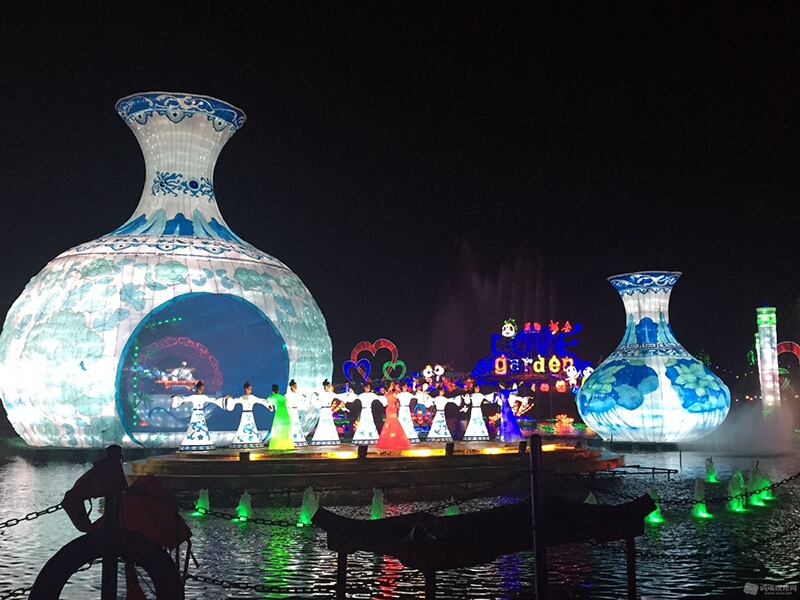
Zigong is strongly associated with Chinese lantern culture and large-scale lantern art.
The city's lantern tradition combines artistic design, structural construction, decorative craftsmanship and lighting technology.
This combination has allowed lantern art to develop from relatively small decorative objects into large public installations capable of transforming entire festival spaces.
Zigong is particularly important to the story of modern Chinese lantern festivals because its lantern culture demonstrates how traditional craftsmanship can continue to develop in response to new artistic and technical possibilities.
Large-scale lantern displays associated with Zigong can include animals, mythical creatures, cultural stories, landscapes and architectural scenes.
Explore our dedicated guide to the
Zigong Lantern Festival
.
Modern Chinese Lantern Festivals
The modern Chinese Lantern Festival combines traditional cultural elements with new forms of art, technology and public entertainment.
A contemporary festival may include large illuminated sculptures, interactive light installations, music, performances, food areas and cultural activities.
Traditional Craftsmanship and LED Technology
Modern lighting technology has expanded the possibilities of lantern design.
LED systems can provide different colors, brightness levels and programmed lighting effects.
Some installations may be synchronized with music or designed to respond to visitor interaction.
Technology can therefore become an additional tool for lantern artists and festival designers.
Large-Scale Public Events
Some modern Chinese Lantern Festival events are designed for large numbers of visitors.
These events may occupy parks, gardens, cultural venues, exhibition spaces or other large outdoor locations.
The festival layout can be carefully designed to guide visitors through different themes and visual experiences.
Immersive Experiences
Modern visitors increasingly expect experiences rather than static displays.
This has encouraged the development of walk-through lantern installations, interactive light areas and large scenes designed for photography and exploration.
Cultural Education
A modern lantern festival can also introduce visitors to Chinese history and culture.
Traditional stories, animals, architecture, legends and historical themes can be communicated through visual design.
This makes lantern festivals particularly suitable for cultural tourism and international cultural exchange.
Regional Chinese Lantern Festival Celebrations
There is no single version of the Chinese Lantern Festival that is celebrated identically across the entire country.
Regional customs can vary considerably.
Different areas may have their own styles of lantern design, food, performances and public celebrations.
Northern and Southern Traditions
Regional differences can influence both festival customs and food traditions.
The methods used to prepare festival foods can vary, as can local approaches to lantern design and public celebrations.
Historic Cities and Lantern Festivals
Historic cities can create especially memorable festival environments.
Traditional streets, old buildings, temples and gardens can provide a dramatic setting for illuminated lantern displays.
Modern Urban Festivals
Large cities may host modern lantern events in parks, exhibition spaces and commercial areas.
These events may combine traditional lantern art with modern entertainment, food and technology.
This variety is one of the reasons the Chinese Lantern Festival continues to attract different audiences.
Chinese Lantern Festival Celebrations Around the World
Chinese Lantern Festival culture has increasingly become part of international cultural events.
Lantern exhibitions inspired by Chinese traditions have been presented in different countries and regions.
These events allow international audiences to experience Chinese visual culture through light, art and storytelling.
Why Lantern Festivals Appeal to International Audiences
Light is a universal form of visual communication.
Visitors do not need to understand every historical detail to appreciate the beauty of a large illuminated installation.
At the same time, cultural explanations and themed displays can provide opportunities to learn about Chinese traditions.
Chinese Lanterns as Cultural Exchange
International lantern festivals can create connections between traditional Chinese art and local culture.
Festival organizers may combine Chinese lantern design with local stories, local landscapes or international cultural themes.
This creates a flexible format for cultural exchange.
The Global Future of Chinese Lantern Festivals
The future of Chinese Lantern Festival events will likely involve a combination of traditional craftsmanship, modern lighting systems, cultural storytelling and international collaboration.
The core idea remains simple: use light to bring people together and create a shared experience.
What Can Visitors Do During the Chinese Lantern Festival?
A Chinese Lantern Festival experience can include a wide variety of activities.
View Lantern Displays
Explore traditional lanterns, large illuminated sculptures and themed light installations.
Solve Lantern Riddles
Participate in traditional riddles and cultural puzzles displayed with lanterns.
Enjoy Traditional Food
Try festival foods such as tangyuan or yuanxiao and experience local culinary traditions.
Watch Performances
Enjoy music, dance, lion dances, dragon dances and other cultural performances depending on the event.
Spend Time With Family
The festival provides an opportunity for family and friends to gather and enjoy a public celebration together.
Explore Nighttime Culture
Modern lantern festivals create unique nighttime environments for walking, photography and cultural tourism.
Chinese Lantern Festival vs. Chinese New Year
The Chinese Lantern Festival and Chinese New Year are closely connected, but they are not the same celebration.
|
Feature
|
Chinese New Year
|
Chinese Lantern Festival
|
|
Timing
|
Begins with the new lunar year
|
Takes place on the fifteenth day of the first lunar month
|
|
Main Themes
|
New year, family reunion and renewal
|
Light, reunion, celebration and the first full moon
|
|
Common Activities
|
Family gatherings, food and traditional celebrations
|
Lantern viewing, riddles, food and public celebrations
|
|
Symbolic Feature
|
New year celebrations
|
Lanterns and the full moon
|
The Chinese Lantern Festival can therefore be understood as an important traditional celebration within the broader period of Chinese New Year festivities.
Explore Related Chinese Lantern Festival Topics
Explore China's wider lantern festival culture,major celebrations,lantern art and the development of modern festival events.
Learn more about the historical development of the Lantern Festival and its changing role in Chinese culture.
Explore lantern viewing,riddles,food,performances and other traditional customs.
Find out when the Chinese Lantern Festival takes place and why the date changes every year.
Explore the cultural meanings associated with Chinese lanterns,light,color and traditional symbolism.
Discover the connection between Zigong and the development of large-scale Chinese lantern art.